
“Thank you, we love the results!”
Well, I did it—my first car shoot.
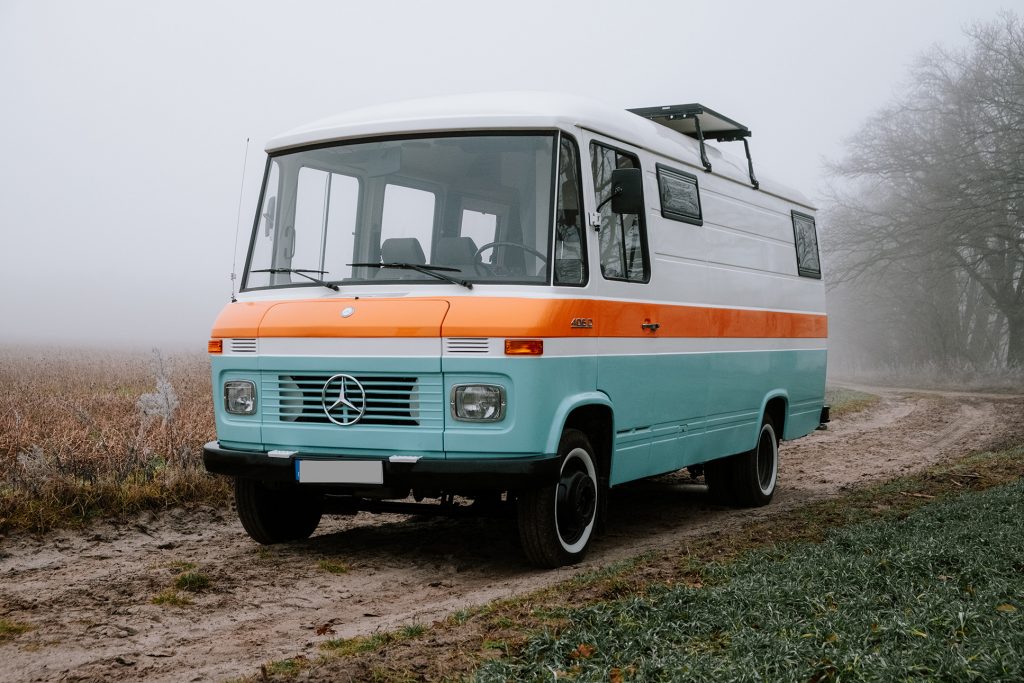
In January, the yearlong rebuild of the vehicle, affectionately named Balthazar Bartholomäus Bus (you see the anime reference, too?), was finally completed. The proud owners, who are self-taught car restorers, asked me if I could take some pictures of their new mobile home before they set off on a long trip through Europe.
Without hesitation, I agreed and suddenly found myself in a completely unfamiliar situation. Maybe it has something to do with getting older, but I’ve developed this inner urge to take every possible opportunity to try something new—at least when it comes to photography.
So, it was time to pretend some level of professionalism and start planning the shoot.
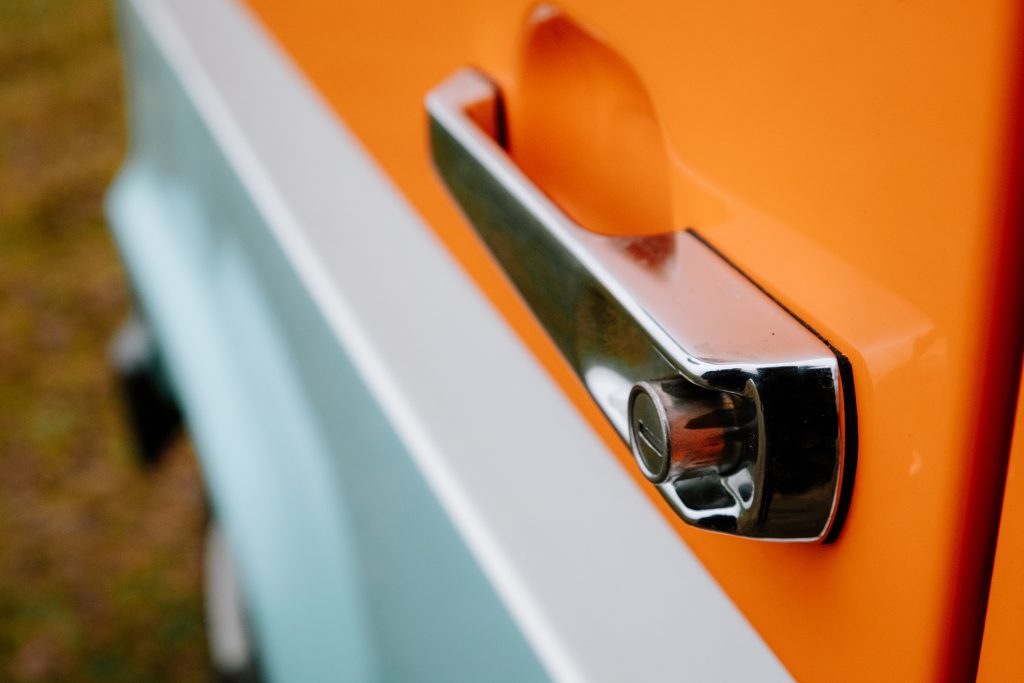
Analog wasn’t an option, which made choosing the gear much easier. The only digital camera I own is still the Fujifilm X-T20, which, at that time, had already seen some use for “important” work. I had previously used it for urban product shots of my friend Phil’s lamps. (Check them out philslicht.de)
While not known as a “professional” camera, the X-T20 is quite capable of delivering great results. Of course, some features found in more expensive cameras are missing, but I’ve figured out how to work around them.
When it came to lenses, I had a few more options. I decided to primarily use the XF 18-55mm f/2.8-4.0 standard zoom lens to stay flexible for any possible composition. However, I also brought along the XC 35mm f/2.0 prime lens in case I needed an extra stop of aperture for better bokeh or low-light situations.
I don’t own any flash gear, so I only brought an LED panel, which I thought would be useful for close-up shots.
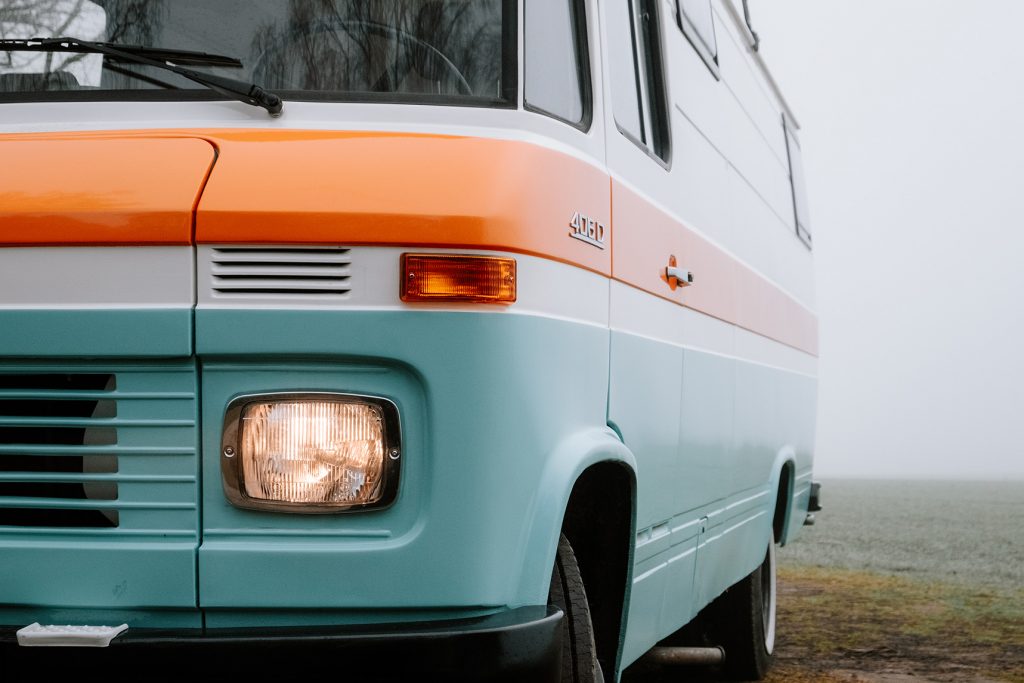
“I’m screwed.” I told myself, already thinking about excuses and the dissapointment of my friends.
With the gear choice made—and therefore relying 100 percent on natural light—the next problem appeared. Or rather, refused to disappear: it turned out to be the foggiest day of the entire winter. And there was no sign of it lifting anytime soon, leading to visibility of less than 30 meters.
With no option to delay the shoot, I had to make the best of it. During the 30-minute drive to the location, I observed the vast, flat landscape of Brandenburg—acres of crop fields, or at least what was left of them in January. I noticed how the fog created a beautifully monochrome backdrop, further isolating the occasional lone trees standing in the middle of the fields.
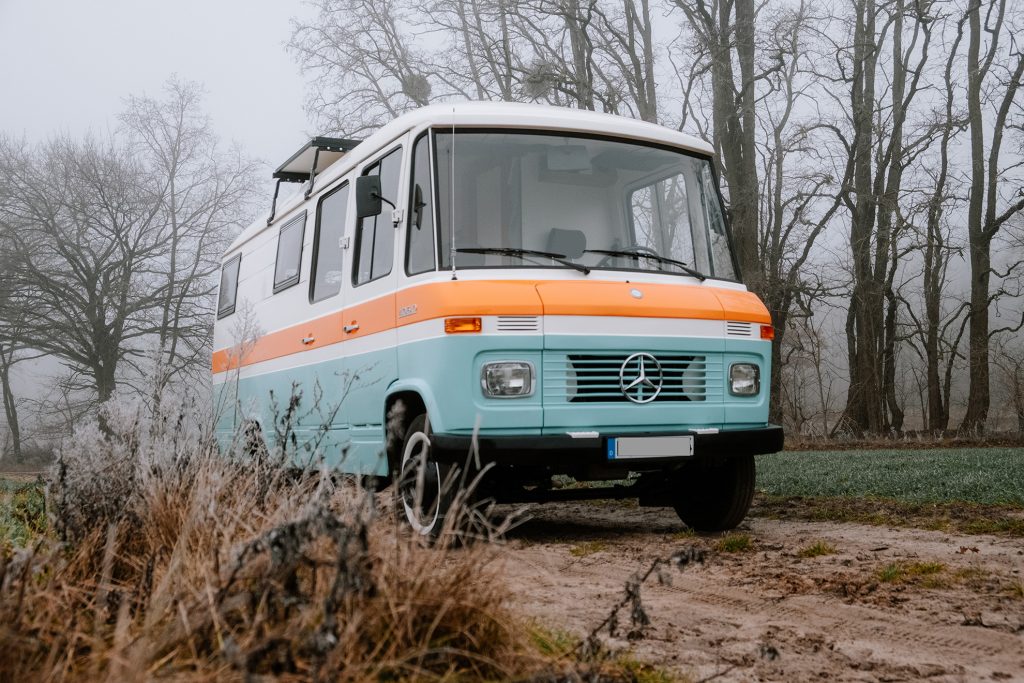
Keeping that in mind, I could only hope for enough sunlight to break through and bring out the colors of Bartholomäus. When we arrived, after a quick tour of the bus, we headed to the first forest clearing next to a field. That’s where I shot the feature image.
To prepare myself, I browsed Pinterest boards using the keyword car photography—and immediately remembered what I didn’t like about car photography. Characterless sports cars and “sexy” people either walking dramatically away from their vehicles or posing in front of them—none of it made any sense to me.
Instead, I focused on the lighting and compositions in the few images I actually liked. I noticed that a 45° angle is very effective for showcasing the length of a vehicle.
When it came to focal lengths, I found that normal (>40mm) and telephoto (85–100mm) lenses were useful for achieving enough compression without artificially distorting the car’s proportions too much. Since the bus is a large vehicle, I often had to step back quite a bit to fit everything into the frame without resorting to focal lengths that were too short. The bus’s straight geometry would have made wide-angle distortions especially noticeable.
One thing I unfortunately only realized after the shoot was that I should have used a polarizer filter to reduce reflections in the windows.
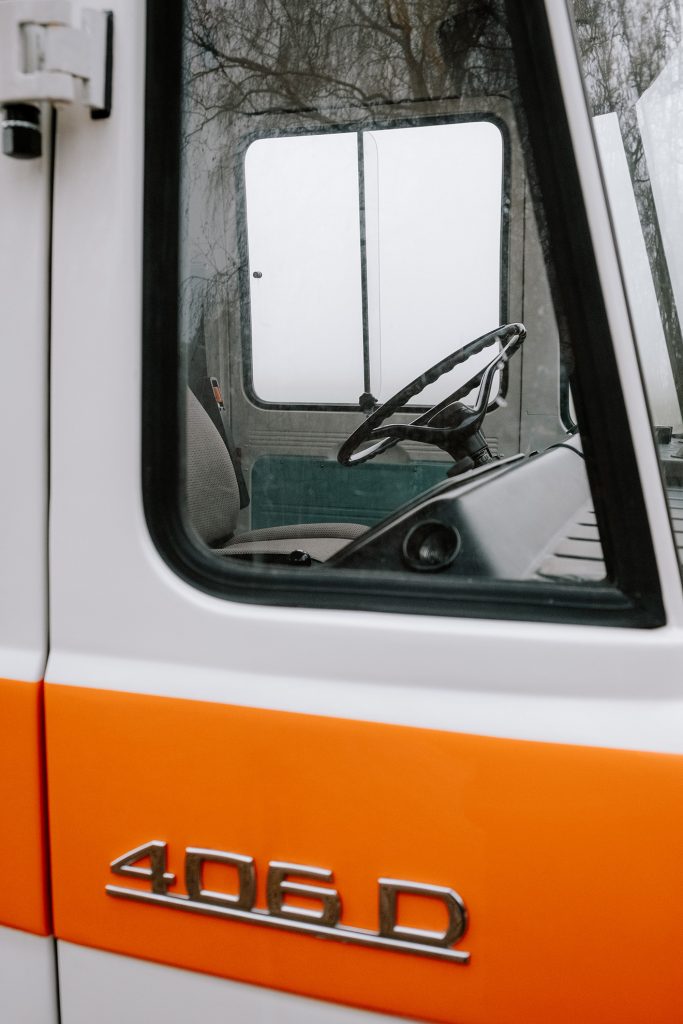
I circled the bus several times to find good angles. The massive front lent itself to some low-level shots, creating frames with a strong presence—just like it had in real life.
The vibrant orange-and-cyan body paint really made the bus stand out against the gray backdrop, which was a stroke of luck. A blue sky would never have had the same effect.
The shoot had to wrap up after about two hours because I had another appointment later that day.
The next day, I started editing the 100 or so files in Adobe Lightroom. At first, I worked from scratch, mainly adjusting the white balance. But soon, I tried the Washed Green 2.0 preset from James Popsys (which you can get for free by subscribing to his newsletter), and suddenly, the colors started to sing. I applied the preset at 70% intensity and made a few minor exposure adjustments.
This was my first time using presets for a large batch of images, and now I get it. I finally understand why so many people pay for them (I even bought a preset collection from James Popsys the other day). Since I don’t enjoy the editing process and I’m rarely satisfied with my own results, this really took a huge weight off my shoulders.
In the end, I’m happy I did it. I’m happy I could help my friends. I’m happy I proved to myself that “serious” photography is within my repertoire. And I’m happy that I’ve grown as a photographer.
I should definitely add car photography to my portfolio—right after I finally create a portfolio page. I’ll keep you updated!
Thanks for reading my story—leave a comment if you liked it!
Leave a Reply
You must be logged in to post a comment.